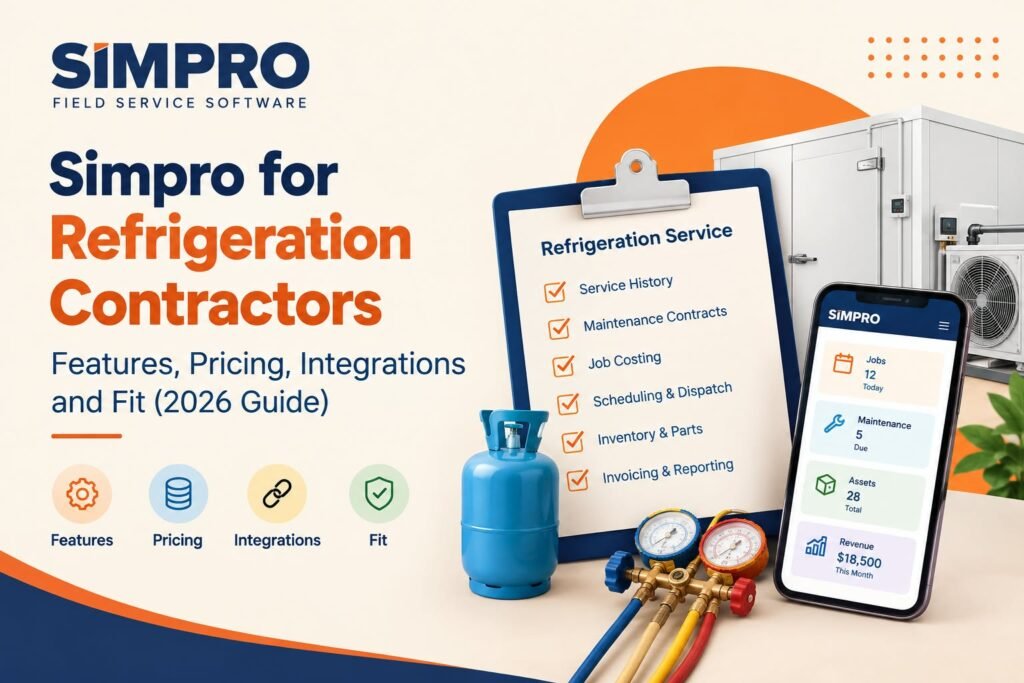
Simpro Pricing: Every Plan, Fee & Hidden Cost
If you’re pricing out field service software for an HVAC, plumbing, electrical, or general contracting business, Simpro pricing is one of the hardest numbers to pin down. Simpro does not publish a public pricing page with fixed tiers, and the monthly license rate is only part of the real total cost of ownership. Between the simpro setup fee, the ongoing simpro implementation cost, and the simpro contract terms buried in the fine print, the number you’re quoted upfront rarely matches what you actually pay.
Quick answer: Simpro cost typically runs from roughly $70 to $300 per user, per month, depending on the plan, the number of users, and which add-ons you need, based on user-reported figures and third-party pricing analyses. Setup and implementation fees are separate and can range from a few thousand dollars for a small team to well over $10,000 for a larger, multi-location rollout. Simpro also tends to require an annual (or longer) contract rather than a simple month-to-month subscription.
In my experience working with contractors evaluating field service management software, the businesses that get burned by simpro cost are the ones who only look at the per-user number and skip the setup fee, training cost, and contract terms. This guide breaks down what Simpro actually charges for, where the hidden costs sit, and how to get a number you can actually budget around.
How Does Simpro Pricing Work?
Simpro prices its software per user, per month, with the total cost depending on:
- How many users need full access versus mobile-only access
- Which plan tier you select (feature access and support level scale with the tier)
- Whether you need add-ons such as Simpro Premium, forms automation, or data feeds
- Your contract length and whether you commit annually or multi-year
Because Simpro sells through a sales-quote process rather than self-checkout, there is no single “how much does simpro cost” answer. This is common among enterprise-grade field service management platforms, but it also means you need to request a quote and negotiate with the specific configuration your business will actually run, not the base feature list.
How Much Does Simpro Actually Cost?
Based on available user reports and independent pricing analyses (Simpro does not publish official rates), here is a realistic breakdown of simpro cost:
| Pricing Factor | Details |
|---|---|
| Estimated Cost | Roughly $70 to $300 per user, per month, depending on plan tier and negotiated terms |
| Monthly Cost (small team, ~10 users) | Approximately $700 to $1,200 per month based on user-reported ranges |
| Monthly Cost (larger deployment, ~100 users) | Approximately $7,000 to $10,000 per month based on user-reported ranges |
| Setup Fee | Commonly $2,000 to $10,000 for implementation, though some users report setup costs well above this for complex configurations |
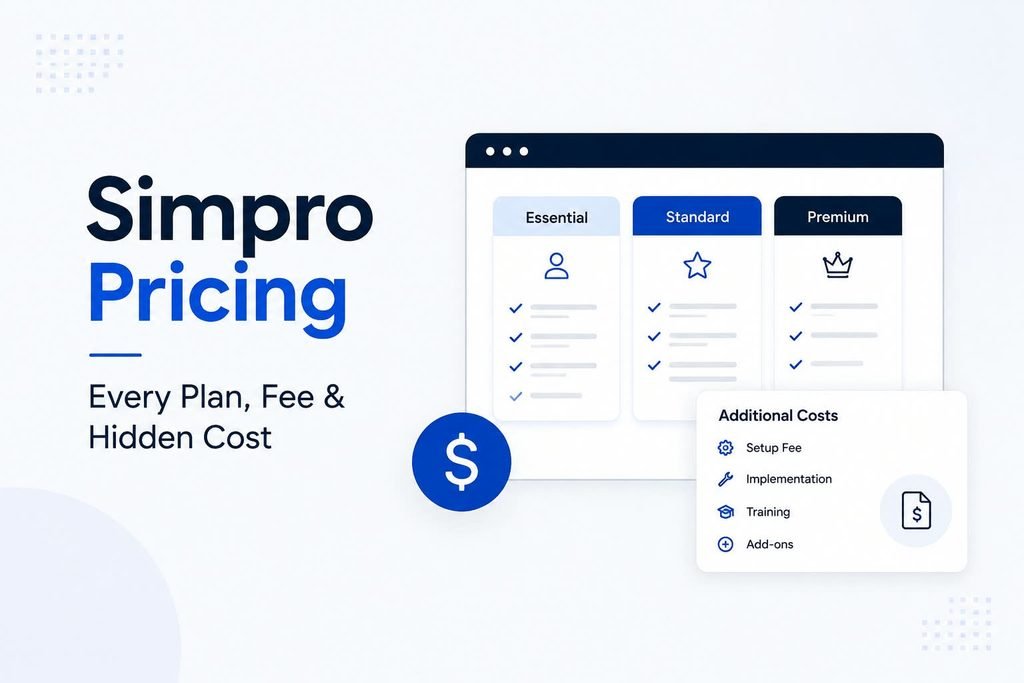
| Additional Costs | Mobile app access for field users, training sessions, data migration, and premium add-ons such as Simpro Premium are often billed separately |
| Contract Terms | Typically an annual commitment; some users report being offered 3-year or 5-year lock-in terms with an annual price increase built in |
The main takeaway is that the advertised or estimated starting price is rarely the price you end up paying. Simpro’s real cost is shaped by user count, plan tier, mobile access needs, and how long a contract you’re willing to sign, so the only way to get an accurate number is to request a quote built around your actual technician count and workflow. For a closer look at how these numbers break down by company size, our Simpro pricing breakdown walks through several real-world scenarios.
What’s Included in Simpro Pricing
Core Modules
A standard Simpro subscription is built around field service management fundamentals: scheduling and dispatch, job costing, quoting and estimating, inventory and materials tracking, timesheets, invoicing, and reporting. These modules are what most contractors are paying for when they evaluate simpro cost against a competitor like ServiceTitan, Jobber, or FieldEdge.
Add-Ons That Cost Extra
Several capabilities are sold as add-ons rather than bundled into the base plan. These commonly include:
- Mobile app access for field technicians (sometimes priced per user, on top of the base license)
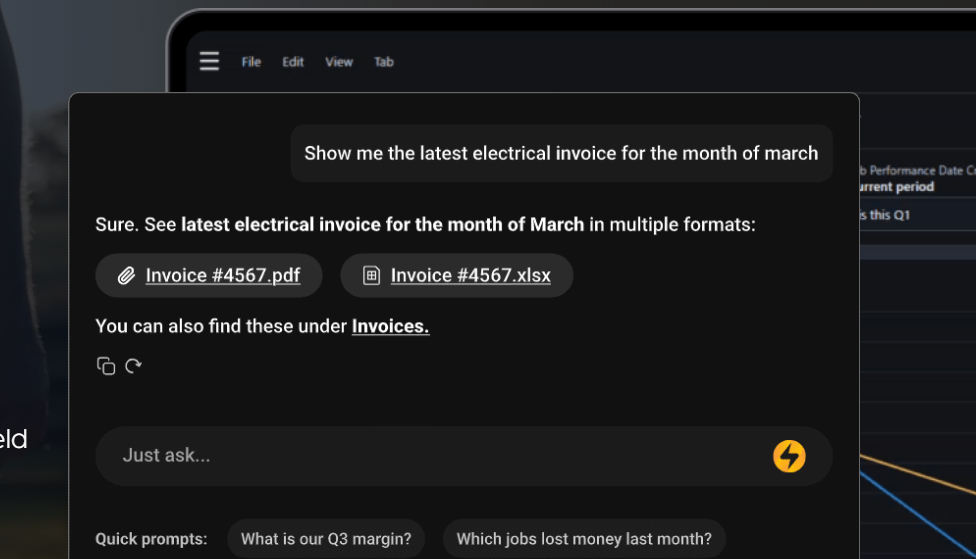
- Simpro Premium and data feed automation, which handles document scanning and automated data entry
- Advanced reporting or business intelligence integrations
- Custom form builders and workflow automation tools
If your team relies heavily on mobile access in the field, it’s worth checking our guide to the Simpro mobile app before you finalize a quote, since mobile licensing is one of the most commonly underestimated line items in a simpro pricing proposal.
Hidden Costs to Watch For
Setup and Implementation Fees
The simpro setup fee is where a lot of the real cost hides. Beyond the monthly licensing fee, expect a one-time charge that covers system configuration, data migration from your old software, and initial account setup. This simpro implementation cost varies widely, from a few thousand dollars for a straightforward small business rollout to five figures for larger or multi-location implementations. A practical approach is to ask Simpro’s sales team for a written breakdown of exactly what the simpro setup fee covers before you sign anything.
Training Costs
Simpro has a reputation among users for a steeper learning curve than simpler field service apps, largely because it’s built for more complex, multi-phase commercial work. Training sessions for new staff are sometimes billed as a separate service rather than included in onboarding, so it’s worth confirming how many training hours are included in your quote and what additional sessions cost. If you’re setting the system up for the first time, our Simpro setup guide covers what to prepare before your implementation kickoff call.
Contract Lock-In Terms
One issue I commonly see with enterprise field service platforms is that the headline per-user price doesn’t reflect the contract structure behind it. Understanding the simpro contract terms matters just as much as the monthly rate. Simpro commitments typically run annual, and some users report being offered multi-year agreements with a built-in annual price increase tied to a percentage similar to a cost-of-living adjustment. Before signing, confirm the simpro contract terms in writing, including the renewal window, the auto-renewal notice period, and whether the user count is fixed for the term or can flex down if your headcount changes.
Simpro Pricing by Business Size
Simpro cost scales differently depending on how many technicians and office staff need access:
- Small teams (1 to 10 users): Expect a combination of per-user licensing plus a smaller implementation fee, with total monthly costs often landing in the low thousands.
- Mid-size teams (10 to 50 users): Costs scale roughly linearly with user count, though some businesses report modest per-user discounts at higher volumes during negotiation.
- Enterprise deployments (100+ users): Pricing becomes fully custom, often bundled with dedicated onboarding support, and monthly costs can run into five figures.
Is Simpro Worth the Cost?
Simpro tends to be a stronger fit for mid-size and larger commercial contractors managing complex, multi-phase projects, detailed job costing, and inventory-heavy operations, rather than a solo operator or small residential service business. From an implementation perspective, the platform’s depth in job costing and procurement is genuinely useful for businesses that need it, but that same depth is part of why the learning curve and cost are higher than lighter-weight competitors.
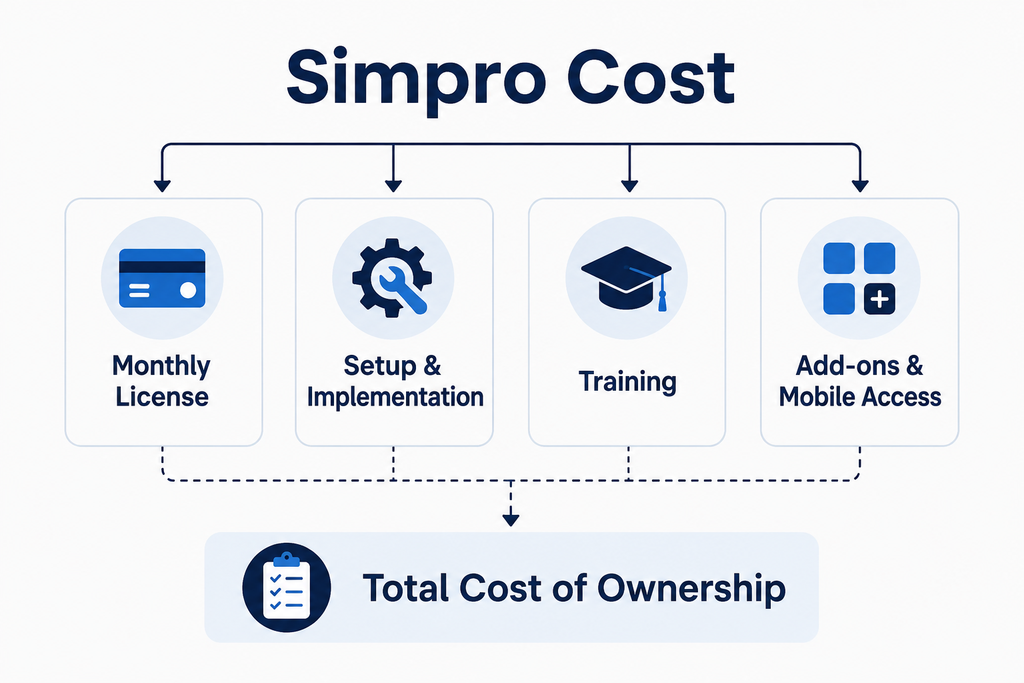
Before committing, weigh the total cost of ownership, licensing plus setup plus training plus your contract term, against what a comparable platform would cost for your specific workflow. If Simpro’s pricing model doesn’t fit your budget or business size, it’s worth comparing it against other platforms on the market. Our Simpro alternatives guide breaks down several field service management options that may offer simpler pricing for smaller teams.
How to Get an Accurate Simpro Quote
To get a number you can actually plan around:
- List your exact user count, split between office staff and field technicians who need mobile access.
- Ask for setup, training, and data migration costs as separate, itemized line items.
- Request the contract length options and confirm whether shorter terms are available.
- Ask directly what happens to pricing at renewal, including any built-in annual increase.
- Compare the full quote, not just the per-user rate, against at least one competitor’s total cost of ownership.
If you’re currently on another platform and considering a move, our Simpro switching guide walks through what a migration timeline and data transfer typically involve.
Final Thoughts
Simpro pricing is not simple, and that’s by design. The per-user monthly rate is only one piece of the real simpro cost; setup fees, mobile licensing, training, and contract terms all add up, and none of them are published on a pricing page. The businesses that come out ahead are the ones that request a fully itemized quote, ask specifically about contract length and renewal terms, and compare the total cost of ownership against other field service management software before signing.
FAQ
How much does Simpro cost per month?
Simpro does not publish official pricing. Based on user reports, monthly cost typically runs from roughly $70 to $300 per user, depending on the plan tier, add-ons, and negotiated contract terms.
Does Simpro charge a setup fee?
Yes. Most Simpro implementations include a one-time setup or implementation fee, commonly reported in the $2,000 to $10,000 range, though this can be higher for larger or more complex rollouts.
Is the Simpro mobile app included in the base price?
Not always. Several users report that mobile app access for field technicians is billed as a separate per-user add-on rather than bundled into the standard license.
Does Simpro require a long-term contract?
Simpro commitments are typically annual, and some users report being offered 3-year or 5-year contract options with a built-in annual price increase.
Why doesn’t Simpro publish its pricing?
Like many enterprise field service management platforms, Simpro uses a quote-based model because costs vary significantly by user count, plan tier, and add-ons, so a single published price wouldn’t reflect what most businesses actually pay.
Is Simpro cheaper or more expensive than competitors like ServiceTitan or Jobber?
It depends on your configuration. Some independent analyses suggest Simpro can cost more per user annually than platforms like Jobber or Housecall Pro, but less than ServiceTitan in certain configurations. The only reliable way to compare is to request itemized quotes from each vendor for your specific user count.